
Your brand, creative work, software, content, confidential business information, and other intellectual property can represent significant business value. An intellectual property attorney helps businesses identify those assets, choose appropriate legal protections, manage registrations and licensing, and respond when rights are threatened. The right legal strategy can help prevent avoidable disputes and preserve the value of intellectual property as a business grows.

What Is an Intellectual Property Attorney?
An intellectual property attorney advises clients on protecting, using, licensing, transferring, and enforcing intellectual property rights. Depending on the business and its assets, that work can involve trademarks, copyrights, trade secrets, licensing agreements, clearance reviews, online content, and infringement disputes.
For a growing company, IP advice is not limited to filing applications. An attorney can help determine who owns a work, whether a proposed brand is available for use, how confidential information should be handled, and what contractual terms are needed when intellectual property is shared with employees, contractors, partners, licensees, or buyers.
An IP protection attorney can also connect legal protection to business strategy. The goal is not simply to obtain registrations; it is to build an approach that supports how the company creates, markets, licenses, and commercializes its assets.
When Do You Need an Intellectual Property Attorney?
Many businesses wait until a dispute appears before getting legal advice. Earlier guidance can be more useful because some IP problems become harder or more expensive to fix after a brand has launched, content has been distributed, or confidential information has been disclosed.
You Are Launching a New Brand
Before investing heavily in a business name, product name, logo, or tagline, consider whether another party already has rights that could create a conflict. A lawyer can assess the proposed mark, advise on clearance, and guide the owner through trademark registration when appropriate.
You Are Creating or Publishing Original Content
Websites, articles, photographs, videos, software, music, artwork, and other original works can raise copyright ownership and licensing questions. Copyright generally exists automatically when an original work is fixed in a tangible medium, but registration and proper documentation can still be important depending on the circumstances.
You Are Sharing Valuable Confidential Information
Customer lists, formulas, processes, pricing strategies, technical know-how, and other confidential business information may qualify for trade secret protection if applicable legal requirements are met. Businesses should consider confidentiality agreements, access controls, policies, and other safeguards before sensitive information is disclosed.
You Are Licensing, Selling, or Acquiring IP
A license, acquisition, investment, merger, or business sale can involve valuable IP rights. An attorney can review ownership, permitted uses, restrictions, royalties, warranties, indemnities, and transfer provisions before the transaction is completed.
What Does an Intellectual Property Attorney Do?
An intellectual property attorney may provide both preventive and responsive legal services. The work should reflect the client's assets, industry, business model, and commercial objectives.
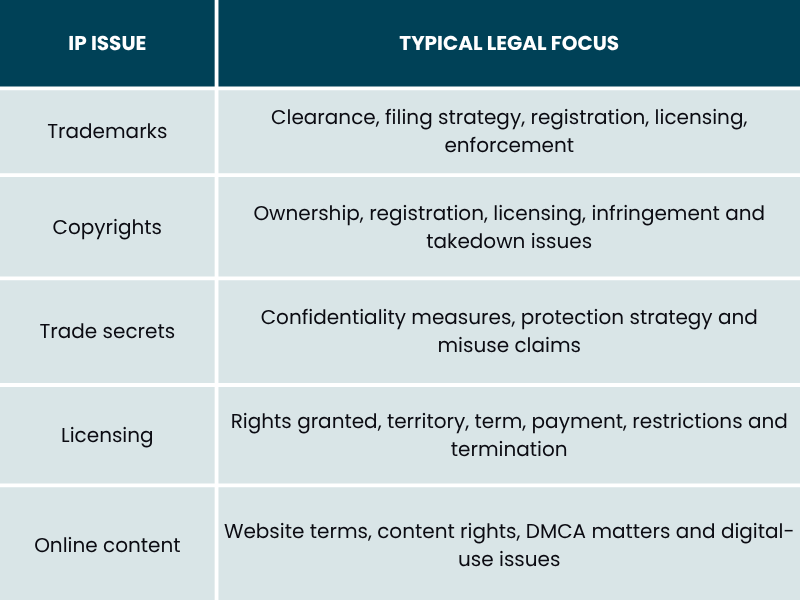
Trademark Strategy and Registration
A strong trademark strategy starts before filing. Clearance can help identify potentially conflicting marks, while the application must accurately identify the relevant goods or services and meet applicable requirements. After registration, businesses also need to monitor use, maintain rights, and address potential infringement.
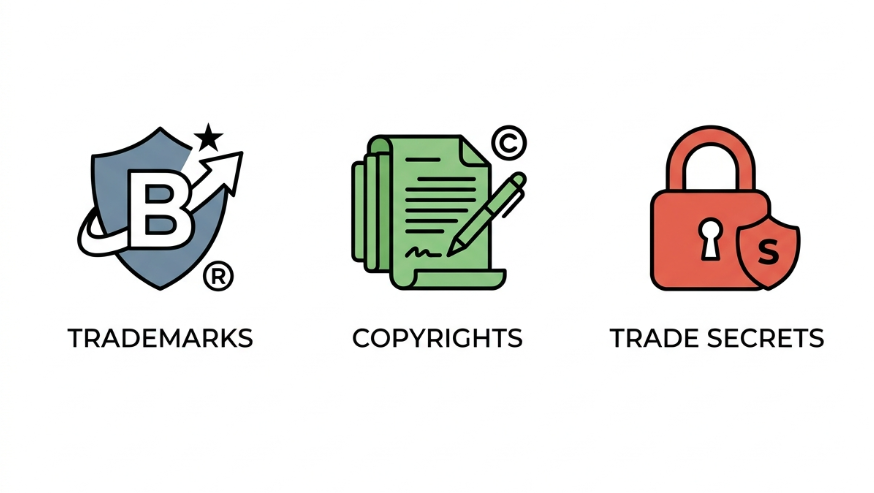
A trademark and copyright attorney can help distinguish brand protection from copyright protection because the two systems protect different types of intellectual property. A trademark generally identifies the source of goods or services, while copyright protects qualifying original expression.
Copyright Ownership and Licensing
Copyright issues often arise when multiple people contribute to a project. Businesses should understand whether works were created by employees, independent contractors, agencies, or other third parties and whether written agreements adequately address ownership and permitted uses.
An attorney can also review licensing terms so the business understands what it may use, modify, distribute, sublicense, or commercially exploit. This matters particularly when content, software, music, photography, or audiovisual material comes from another creator.
Trade Secrets and Confidentiality
Trade secret law depends on more than calling information “confidential.” Businesses generally need to take reasonable measures to keep qualifying information secret. Agreements such as NDAs can be important, but internal practices, limited access, security measures, employee procedures, and consistent handling of confidential information can also matter.
IP Due Diligence
When a company is being purchased, invested in, merged, or licensed, intellectual property due diligence can uncover ownership gaps, expired or missing registrations, restrictive licenses, disputes, or unclear contractor arrangements. These findings can affect valuation, deal terms, warranties, and the decision to proceed.
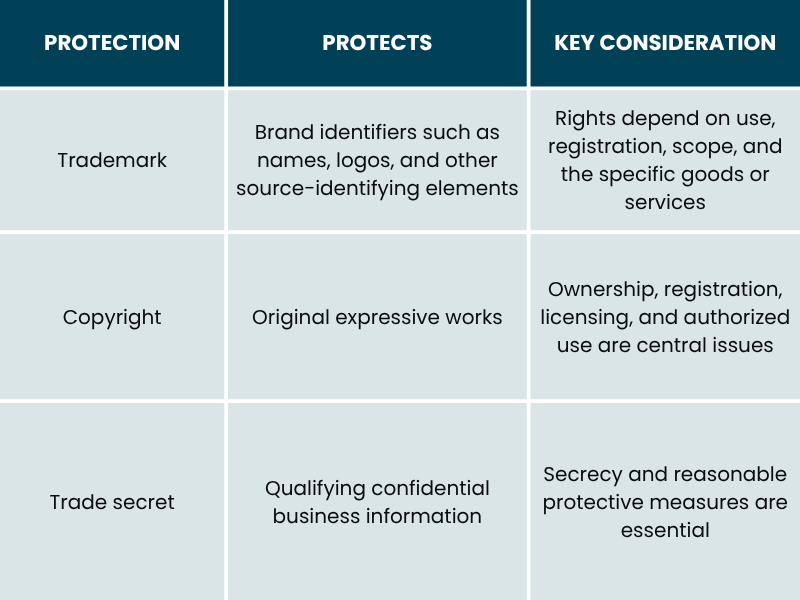
How Intellectual Property Rights Compare
Different forms of IP protection solve different legal problems. Choosing the right protection depends on what the asset is, how it is used, and what the business needs to control.
Intellectual Property Attorney vs. General Business Attorney
A general business attorney may advise on contracts, entity matters, governance, employment issues, and broader operational concerns. An intellectual property attorney focuses more specifically on rights involving brands, creative works, confidential information, licensing, ownership, and infringement.
There can be substantial overlap. For example, a business acquisition may require both corporate transaction advice and IP analysis because trademarks, software, copyrights, licenses, and trade secrets can be among the assets being transferred.
Intellectual Property Law Firm vs. Intellectual Property Attorney
The terms describe different things. An intellectual property law firm is the legal practice through which one or more attorneys provide services, while an individual attorney is the lawyer advising the client. For a client, the more important questions are whether the lawyer has relevant experience, understands the business, and can address the specific IP issue involved.
Red Flags That Mean You Need Legal IP Advice Now
Consider obtaining legal advice promptly if:
-
You are preparing to launch a brand without checking for conflicting rights.
-
A contractor or former employee's ownership of important IP is unclear.
-
Investors, buyers, or partners want rights to your IP.
-
Your business is licensing valuable content, software, branding, or technology.
-
A competitor appears to be using your brand or copying protected material.
-
Confidential business information may have been disclosed without authorization.
-
A transaction involves IP assets across multiple entities or jurisdictions.
How Much Does an Intellectual Property Attorney Cost?
Legal fees vary according to the type and complexity of work. Common arrangements include hourly billing, flat fees for defined services, and other structures agreed upon with the client. Registration work may be easier to scope than a complex licensing negotiation, ownership dispute, or infringement matter.
Before engagement, ask what the fee covers, which tasks are included, what expenses may be separate, and how additional work will be handled. Clear expectations can make legal costs easier to manage.
How to Choose the Right IP Attorney for Your Matter
Consider these factors before hiring counsel:
-
Relevant experience with the type of IP involved.
-
Familiarity with your industry and business model.
-
Experience with registration, licensing, transactions, or disputes as needed.
-
A clear explanation of the proposed legal strategy.
-
Transparent billing and communication expectations.
-
Responsiveness when business decisions depend on timely legal guidance.
For businesses with overlapping corporate, media, and IP needs, it can also be useful to choose counsel who understands how these areas interact.
Protect Intellectual Property Before Problems Escalate
Intellectual property can be one of a business's most valuable assets, but protecting it requires more than filing paperwork. An intellectual property attorney can help identify risks, establish appropriate protections, structure licensing and ownership arrangements, and respond strategically when rights are challenged.
If your business is launching a brand, creating valuable content, licensing IP, acquiring another company, or handling a potential infringement issue, professional legal guidance can help you make informed decisions before a preventable problem becomes expensive.
Ready to protect the intellectual property behind your business? Contact the Law Offices of Suzanne E. Rogers to discuss your needs and book a free 15-minute consultation.