
A trademark clearance search is a review of existing trademarks and marketplace use to identify potential conflicts before you apply to register a brand name, logo, or slogan. It helps business owners assess whether a proposed mark may be available for their particular goods or services and identify legal risks before investing in a launch. Choosing a brand name is an important business decision, but a name that sounds distinctive may already be protected by another business. Searching before filing can help you make a more informed decision, reduce avoidable expenses, and build your brand on a stronger legal foundation.

What Is a Trademark Clearance Search?
A trademark clearance search examines existing federal and state trademark records, unregistered marks, and other relevant marketplace uses to identify marks that could conflict with your proposed brand. Unlike a quick search for an identical name, it considers similarities in wording, sound, appearance, meaning, and the goods or services associated with each mark.
The objective is not simply to find out whether another business uses your exact name. It is to identify potential legal obstacles to registration or commercial use and evaluate their significance before you commit to the brand.
Trademark Clearance Search vs. Trademark Availability Search
A trademark availability search and a clearance search are often used interchangeably, but their scope can differ. An availability search may refer to a preliminary check of existing records, while a clearance search generally suggests a broader investigation and legal assessment of potential conflicts.
The terminology is not completely standardised across providers. Rather than relying on the name of the service, confirm which databases are searched, whether unregistered marketplace use is investigated, and whether an attorney evaluates the findings.
Why Skipping a Trademark Clearance Search Is Risky
Registering a business name, purchasing a domain, and investing in marketing do not automatically establish that you can safely use the brand. Discovering a conflict late can create legal, financial, and operational problems that might have been identified earlier.
Trademark Infringement Risk
Using a mark that conflicts with another party's trademark rights may expose your business to a demand to stop using the name, a dispute over registration, or litigation. The outcome depends on the facts, the relevant rights, and applicable law; a similar name does not automatically establish infringement.
A proper search helps identify potential trademark infringement risk before you invest heavily in a name. It also gives you an opportunity to consider alternatives or seek legal advice when an existing mark raises concerns.
Wasted Filing Fees on a Rejected Application
The United States Patent and Trademark Office (USPTO) examines applications for potential conflicts with existing federal marks. If an examining attorney identifies a likelihood of confusion, the application may be refused. The USPTO's examination does not replace your own broader investigation, and application fees are generally not refunded simply because registration is unsuccessful.
Rebranding Costs After Launch
Imagine a start-up launches a skincare line under a name it has checked only through a domain registrar and social media. After spending money on packaging, website design, advertising, and inventory, the founders discover an established skincare business using a confusingly similar mark.
They may need to replace packaging, update digital assets, notify customers, and rebuild brand recognition. Even if a dispute never reaches court, changing a name after launch can be considerably more disruptive than evaluating alternatives before filing.
What a Comprehensive Trademark Search Actually Covers
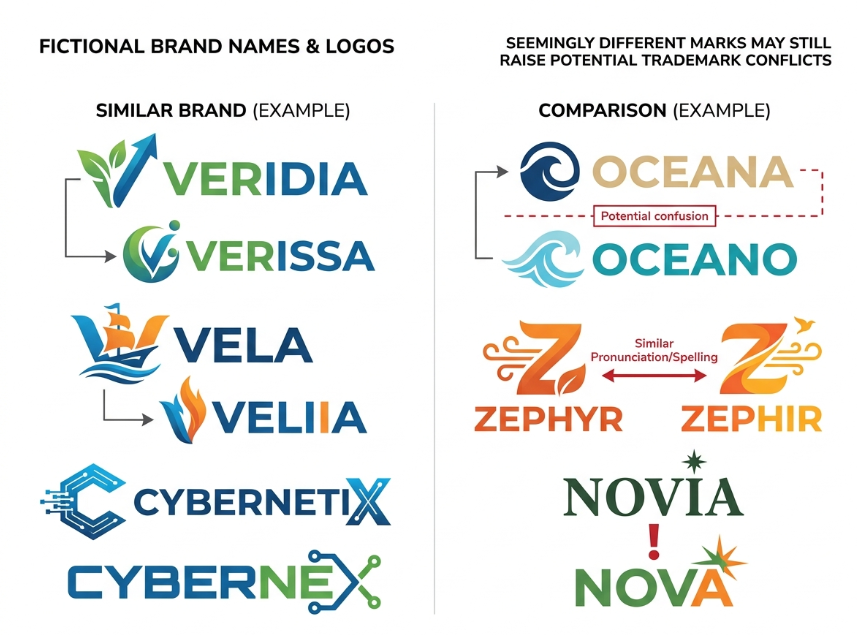
A comprehensive trademark search goes beyond an exact-name lookup. The appropriate scope depends on the proposed mark, the goods or services involved, the intended markets, and the nature of the business.
USPTO TESS Database Search
The former USPTO TESS database (Trademark Electronic Search System) has been replaced by the USPTO's newer trademark search system. Businesses should use the current USPTO trademark search tools to investigate federal applications and registrations. The search should include pending applications and live registrations, variations of the proposed mark, and marks used for related goods or services. Search results must be reviewed in context: a record's status, owner, filing history, and listed goods or services can all affect its relevance.
State Trademark Registers
Federal records are not the only relevant source. State trademark registrations can reveal potentially conflicting rights within particular jurisdictions. Searching appropriate state databases adds another layer of review, especially when a business operates locally or plans to expand into new markets.
Common Law (Unregistered) Trademark Use
Trademark rights in the United States can arise through qualifying use in commerce, even without federal registration. A search should therefore investigate relevant business websites, online marketplaces, industry directories, news coverage, and other sources that may reveal earlier use of a name.
An unregistered mark may still create a legal obstacle. Conversely, finding a business using a similar name does not automatically mean it has enforceable rights that prevent your proposed use. The facts require evaluation.
Similar Marks and Phonetic Variations
A meaningful search considers more than identical spelling. It may include alternative spellings, abbreviations, plural forms, similar pronunciations, and distinctive design elements. Marks in different international classes may also conflict when their associated goods or services are commercially related.
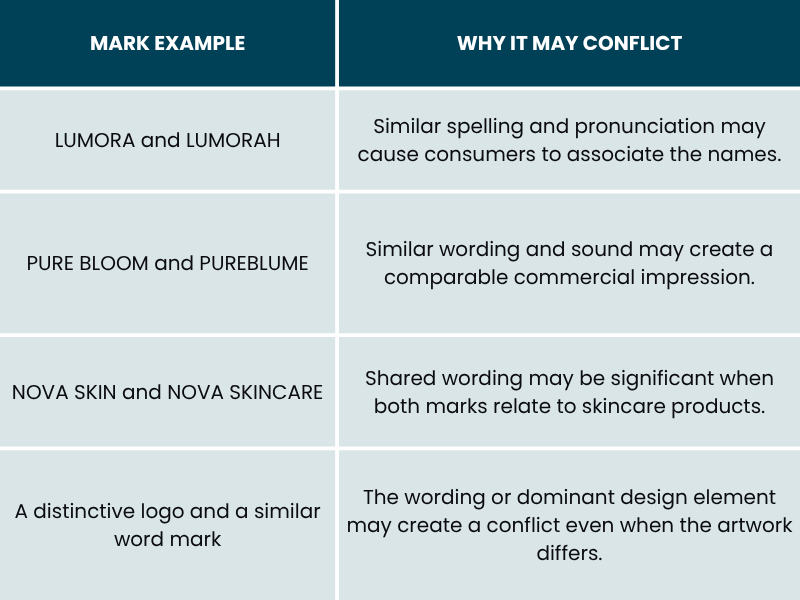
These examples are illustrative, not actual clearance findings. Whether a conflict exists depends on the complete marks, relevant goods or services, marketplace circumstances, and applicable law.
Understanding "Likelihood of Confusion"
Likelihood of confusion is the legal standard commonly used to assess whether consumers may mistakenly believe that goods or services offered under two similar marks come from the same business or from affiliated businesses.
The marks do not have to be identical. The USPTO considers factors including their similarity in appearance, sound, meaning, and overall commercial impression, alongside the relationship between the goods or services. The relevant factors and their weight depend on the circumstances.
For example, imagine one company sells skincare products under the name SILVA and another seeks to register SILVA for closely related skincare products. Consumers might assume the products share a source, particularly if the names and sales channels are similar.
Now imagine the same name is used for an unrelated service with no meaningful commercial connection. The analysis could be different. Trademark conflicts are not decided by comparing names in isolation; the relationship between the marks and their commercial context matters.
The USPTO explains this standard in its guidance on likelihood of confusion.
DIY Trademark Search vs. Hiring a Trademark Search Attorney
A business owner can perform useful preliminary research independently. However, identifying search results and determining their legal significance are different tasks. A trademark search attorney can help assess potentially conflicting marks, explain uncertainty, and advise on whether to proceed, modify the proposed mark, or explore alternatives.
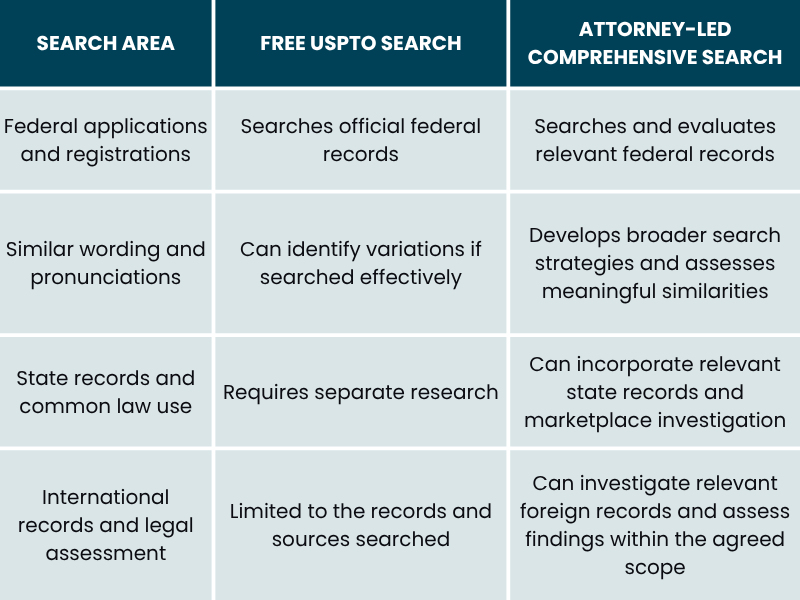
An attorney-led search is not automatically exhaustive, and its scope should be confirmed before work begins. International research may be particularly important for businesses planning overseas expansion, but a U.S. clearance exercise does not establish worldwide availability.
DIY research is a useful starting point, especially for comparing possible names before investing in them. Professional review becomes particularly valuable when the mark is central to the business, search results reveal similar names, or a launch involves substantial expenditure.
What Happens After the Clearance Search? Next Steps Toward Filing
Once the results have been reviewed, the next step is to make an informed decision about the proposed mark. Depending on the findings, you may proceed with the current name, revise it, select a stronger alternative, or investigate a potential conflict further.
If the mark appears suitable, the application process involves identifying the correct owner, specifying the goods or services, determining the appropriate filing basis, and preparing the application for submission to the USPTO. The application should accurately reflect the intended commercial use and meet the applicable legal requirements.
Clearance does not replace careful application preparation. Nor does a favourable initial assessment eliminate the possibility of an examiner's refusal or an objection from another trademark owner. Before filing, consider the proposed mark's commercial importance, the markets in which you plan to use it, and the consequences of changing it later. These considerations can help you decide how much investigation is appropriate.

Protect Your Brand Before You File
A trademark clearance search is an important early step in protecting a business name, logo, or slogan. By investigating existing rights and evaluating potential conflicts before filing, you can make better-informed branding decisions and reduce the risk of costly changes later.
Ready to move forward with confidence? Contact S.E. Rogers Law to discuss your proposed trademark and determine what level of clearance review fits your business. Visit the firm's Trademark Law services page to explore legal support, and request a consultation to discuss your brand before investing in an application or launch.